This week’s list of top data news highlights covers October 25, 2025 to October 31, 2025 and includes articles on supporting addiction recovery with VR and developing firefighting drones.
1. Training for Surgical Procedures
King Faisal Specialist Hospital & Research Centre, based in Riyadh, Saudi Arabia, has developed a surgical training system that combines physical models of body parts with augmented reality simulations. Trainees practice procedures on synthetic joints, such as knees and shoulders, while watching their actions simulated on a screen. After each session, the system provides detailed performance data that helps surgeons track accuracy, build skill, and gain confidence before treating real patients.
2. Predicting Bacterial Growth
Researchers at Huazhong Agricultural University in China have developed a machine learning model that predicts the optimal growth temperatures for bacteria by analyzing their protein structures. Scientists trained algorithms to identify patterns in proteins that correlate with temperature adaptability, revealing how certain protein types dominate in heat-tolerant versus cold-adapted environments. The findings help optimize industrial fermentation, biofuel production, and environmental cleanup by identifying the most efficient bacterial strains for each process.
3. Serving Hotel Guests Robotically
Keenon Robotics, a robotics company based in China, has developed a team of AI-powered robots to automate hotel operations. There is a humanoid robot that greets guests and answers questions, along with mobile robots that deliver food, clean rooms, and carry luggage. Using cameras and speech recognition, the robots interpret guest requests and share data to coordinate tasks in real-time. The hotel says the robots have made operations faster and freed staff to focus on personal service.
YouTube has introduced an AI-powered “Super Resolution” feature that upgrades older or low-quality videos to high definition. The system analyzes uploads between 240p and 720p and uses deep learning to reconstruct sharper textures, improve lighting, and fill in lost visual details. Creators have the option of opting out of the automatic updates and retain their original files, while viewers can toggle between enhanced and original versions.
5. Navigating Drones in the Dark
Researchers at Worcester Polytechnic Institute in Massachusetts have developed small drones that use sound instead of light to navigate in darkness. Modeled on how bats echolocate, the drones emit high-frequency sound waves and measure the returning echoes to detect obstacles. AI software then filters and interprets these signals to guide flight, allowing the drones to maneuver safely through fog, smoke, or total darkness.
Researchers at the European Molecular Biology Laboratory in Germany have developed MAGIC, an AI system that helps scientists record how DNA abnormalities surface as cells divide. The tool scans living cells and spots fragments of DNA that break away during the process—an early warning sign of cancer. It then marks those cells with fluorescent light so researchers can track and study them automatically.
7. Supporting Addiction Recovery
Texas Health’s Addiction Recovery Center in Fort Worth, Texas, is using VR to help patients practice resisting substance use in realistic but controlled settings. The program places patients in simulated environments that might normally trigger cravings such as house parties, bars, or liquor stores. Guided by therapists, patients repeat these sessions until their stress responses lessen and their confidence in refusing substances grows. Clinicians say the technology offers a safer, more consistent way to help people build coping skills before facing real-world situations.
8. Developing Firefighting Drones
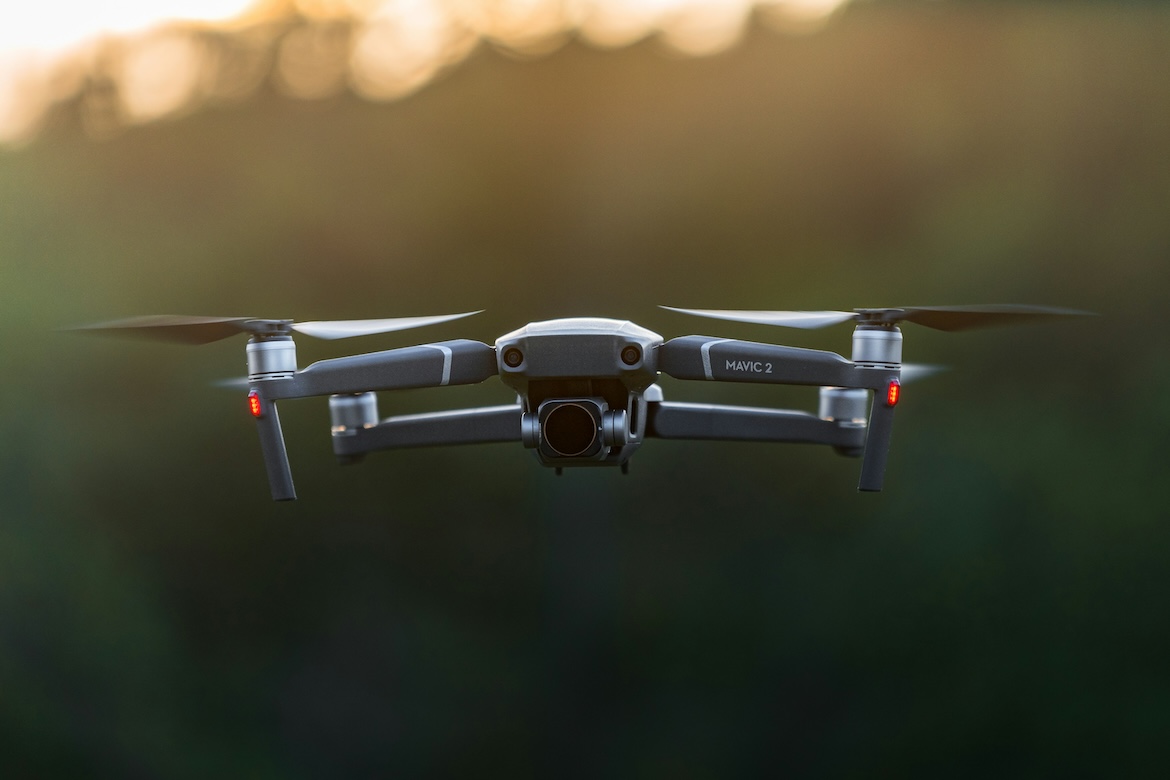
Seneca, a technology company based in Seattle, has developed autonomous firefighting drones that can detect and extinguish wildfires within minutes. The drones use AI and infrared sensors to locate flames, navigate through smoke, and release high-pressure fire-suppressing foam with precision. Each drone can be launched remotely, operate in swarms, and deliver up to 1,000 pounds of suppressant per mission. The technology allows firefighters to respond faster and more safely to fires in remote or hazardous areas.
JetZero, an aviation startup based in the United States., is using AI to design a new generation of fuel-efficient airplanes. The company builds virtual replicas of its aircraft and factories to test performance, safety, and production methods before constructing anything physical. These AI simulations allow engineers to model flight behavior and manufacturing logistics in real-time, reducing costs and energy use across development.
10. Monitoring Satellite Batteries
Researchers at the University of California, Davis, have developed an AI platform that allows satellites to monitor the health of their batteries in space. The platform creates a virtual replica, or digital twin, of the spacecraft’s power supply, using AI to track battery performance and predict future failures in real-time. By running these models directly onboard, instead of on Earth, the satellite can detect and respond to problems autonomously.