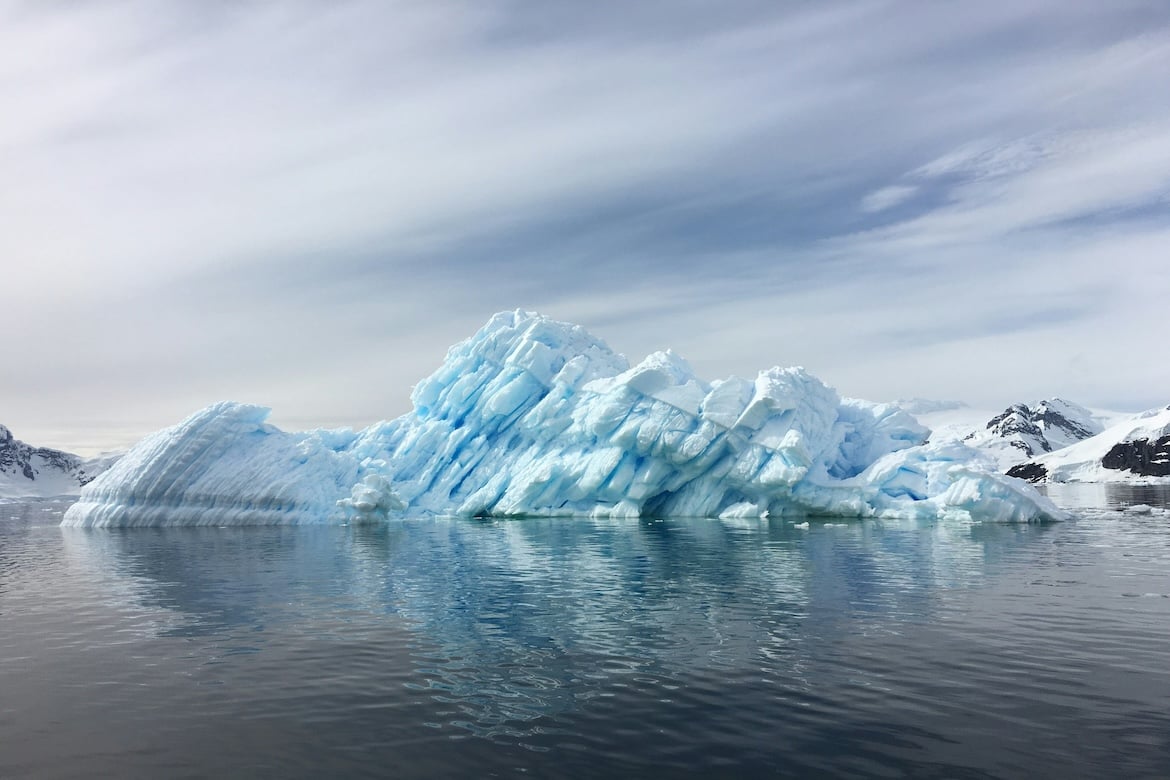
Researchers from the University of Houston have created a dataset that maps the lines on the Antarctic bedrock where glaciers have lifted off and begun to float on the ocean. Shifts in these boundaries, known as grounding lines, offer critical clues for predicting future sea-level rise. To pinpoint them, the researchers used radar satellites that send microwave pulses toward the ice and record the echoes that bounce back. By comparing measurements, they can detect vertical ice movement as small as a few centimeters. The dataset compiles more than 700 radar measurements, creating one of the most detailed records yet of how Antarctica’s glaciers are retreating.
Image Credits: Cassie Matias