
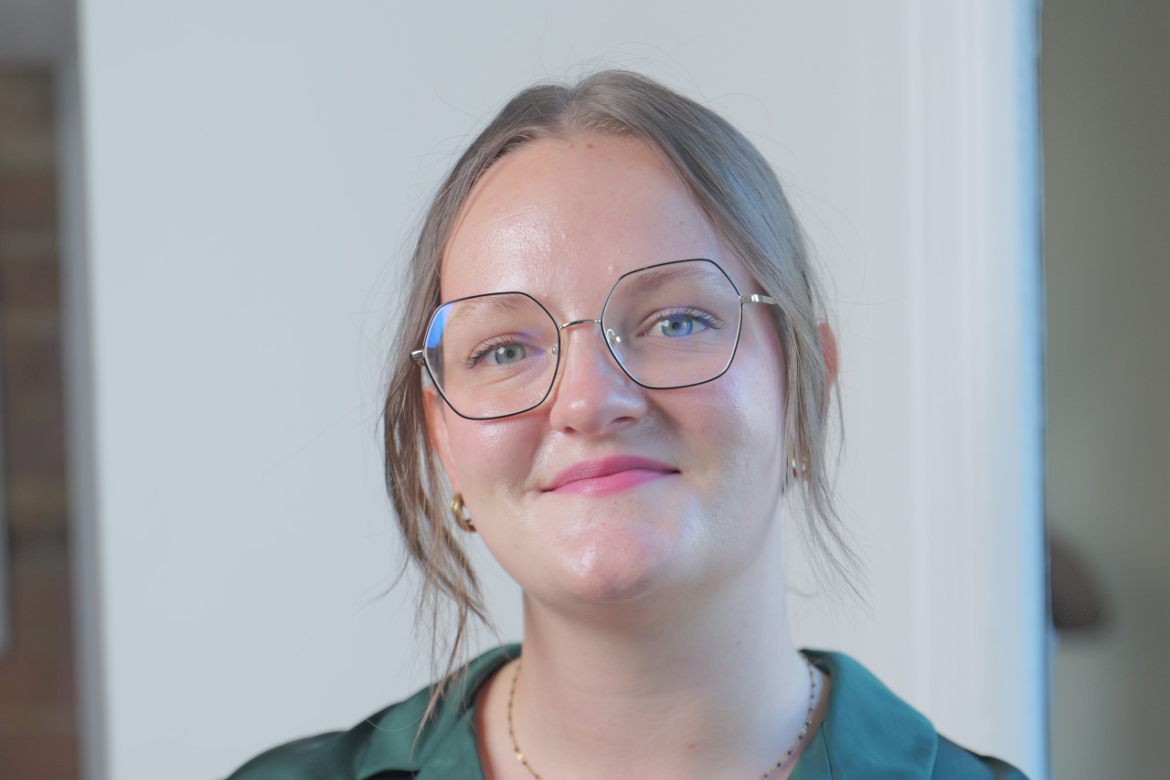
The Center for Data Innovation recently spoke with Zoé Ducourau, Lead AI Engineer at BioEureka, a Canadian company using an AI-powered image recognition platform to help laboratories rapidly identify pathogens. Ducourau explained how Bioeureka’s system leverages deep-learning models to detect subtle bacterial features, enabling faster identification and more efficient diagnostic workflows.
David Kertai: What problem is BioEureka solving?
Zoé Ducourau: Bioeureka addresses slow, centralized, and resource-intensive microbiology workflows. Traditional identification methods can take several days, which creates knock-on delays across the sectors that rely on identifying pathogens in a timely manner, whether clinicians waiting to tailor treatment, food-safety teams monitoring contamination risks, or agricultural specialists managing crop and animal health. We design rapid, reliable diagnostic tools that shorten these timelines while remaining simple to use across a wide range of laboratory settings.
Kertai: How do the solutions you offer to improve pathogen identification work?
Ducourau: Our main products are AIMO, MicroSelect, and Dethro. AIMO is an AI-powered platform that can identify microorganisms with an AI-powered platform in minutes, reducing turnaround time by more than 85 percent. AIMO identifies pathogens by applying AI-driven image analysis to Gram-stained samples—a common technique for distinguishing bacterial groups. The system uses a standard microscope to capture images and then processes them with deep-learning models trained on hundreds of thousands of expertly annotated bacterial images. These models learn to recognize structural and morphological patterns, such as cell shape, clustering, staining characteristics, and texture, features that microbiologists rely on but are difficult to assess consistently at scale.
Then, AIMO uses image-segmentation algorithms to isolate individual microorganisms, keeping the analysis precise. After processing the image, the platform generates a ranked list of likely pathogens and recommends the most appropriate confirmatory tests. By automating this visual step, AIMO speeds up identification and provides technicians a consistent, high-quality foundation for further analysis.
We also have MicroSelect, which is a tri-compartment Petri dish that carries three different growth surfaces—such as TSA+Blood, MacConkey, and MSA—used to detect infection-causing pathogens. Combining these surfaces in a single dish streamlines preparation, reduces handling errors, and minimizes waste. Dethro provides life-saving maternal screening in under two minutes. Together, these tools expand access to high-quality diagnostics, reduce laboratory waste, and eliminate the need to transport samples long distances.
Kertai: How does BioEureka keep laboratory data secure?
Ducourau: BioEureka prioritizes security at every step. All digital samples and result data are end-to-end encrypted, and user access is strictly controlled so each person has only the permissions they need. Furthermore, every sample receives a unique ID that follows it from its original upload to its final confirmation, ensuring complete tracking throughout the diagnostic process.
Kertai: What sets your technology apart from other AI-powered diagnostic systems?
Ducourau: Our system stands out because it integrates into existing workflows instead of requiring new infrastructure or specialized hardware. It combines advanced algorithms with practical features such as offline capability, compatibility with standard microscopes, and validated performance metrics that consistently exceed 92 percent identification accuracy.
We also design AI to support human expertise. AIMO suggests likely pathogens and next steps, but technicians make the final call. This approach keeps the identification process transparent and ensures that skilled professionals remain central to the process.
Kertai: What’s your vision for BioEureka’s future?
Ducourau: We aim to make diagnostics accessible for laboratories everywhere. We plan to further reduce turnaround time and improve identification accuracy by expanding AIMO into a multimodal system and refining our image-based tools. Ultimately, we seek to empower laboratories to operate sustainably, strengthen global health resilience, and expand access to high-quality diagnostics, while keeping human expertise at the center.


