
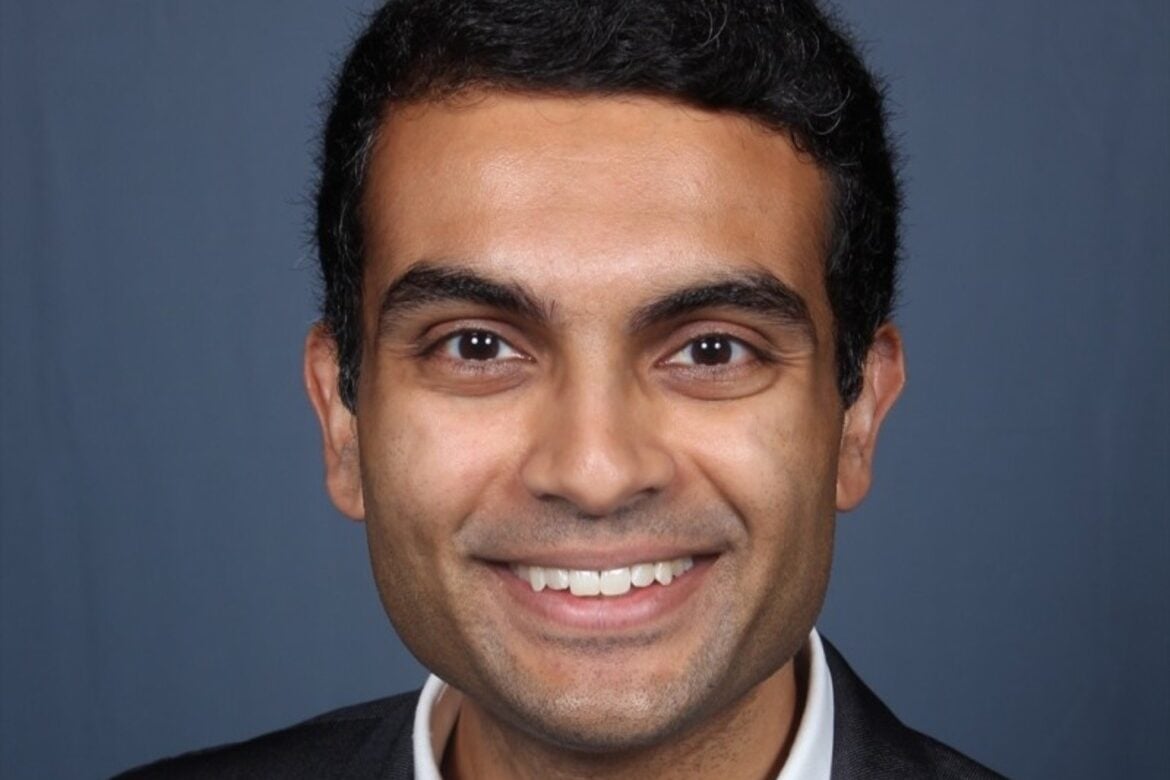
The Center for Data Innovation recently spoke with Naren Tallapragada, CEO of Tessel Biosciences, a Massachusetts‑based company using AI to advance drug discovery for complex diseases. Tallapragada described why chronic diseases are so difficult to treat, given their biological complexity and patient-to-patient variation, and how Tessel is working to reduce the high failure rates in drug development.
David Kertai: What core challenge is Tessel Bio solving?
Naren Tallapragada: Complex chronic diseases, such as Crohn’s and Chronic Obstructive Pulmonary Disease, remain incredibly difficult to treat because they do not stem from a single, uniform biological driver. Instead, they can arise from a range of interacting genetic and environmental factors, which vary widely from person to person. Unlike some cancers, where drug developers can often target specific molecular drivers, chronic inflammatory and fibrotic diseases rarely present a single, dominant pathway to intervene on. When a disease includes many different underlying biological patterns, a drug aimed at one of them may only help some patients; in a trial that groups everyone together, that benefit can get lost in the overall results, which is one reason many phase two trials fail to show clear effectiveness.
Instead of starting with a guess about which gene or pathway causes disease, we start by running controlled experiments in human cells and use AI to decipher the results. We systematically turn specific genes on or off, or expose cells to certain compounds, and then observe what changes—for example, whether the cells produce more mucus or contract more strongly. These experiments show us which biological ‘switches’ actually alter disease-related behavior. We use our AI models to analyzes the results of these experiments and suggest potential targets that might work better, and for more types of patients, than anyone’s initial guess. By pinpointing targets that have a clear effect in human cell systems, we increase the chances that a drug will work in patients and reduce the risk of costly trial failures.
Kertai: How do your AI models help you understand cellular behavior in ways traditional methods can’t?
Tallapragada: In complex diseases, many molecular signals change at the same time. Traditional approaches often examine these signals one by one—asking whether a single gene is up or down and whether that correlates with disease. But when dozens or even hundreds of genes shift together, looking at them individually makes it difficult to understand how they interact or which combinations are actually driving the problem.
Our AI models is built to analyze those interactions directly. Instead of treating each gene or pathway separately, it learns how patterns of changes across many genes work together to produce measurable cellular behavior. In our experiments, we perturb genes systematically and observe the functional outcome. The models then identify which combinations of molecular changes consistently lead to loss of proper organ function. By focusing on these interacting patterns—rather than isolated signals—it can pinpoint the biological mechanisms most likely to drive disease and therefore most likely to translate into effective drug targets.
Kertai: What types of data are most important for your platform, and how do you keep that data reliable?
Tallapragada: The most important data for our platform is simple: how human cells actually behave. Instead of just measuring which genes are active in cells, we look at what the cells physically do, for example, whether gut tissue becomes stiff or whether tiny hair-like structures called cilia in lung cells move properly. Those behaviors are closer to what patients experience, so they give the models something meaningful to learn from.
We collect all measurements in a consistent protocols and have scientists review them to ensure accuracy. We also supply our models with contextual information from public datasets like single-cell atlases, which map how different cell types behave. This background helps our AI models understand what ‘normal’ looks like across cell types and interpret results without limiting its ability to discover new or unexpected mechanisms. By combining fit-for-purpose functional data and careful quality control, we can train our models to find biological changes actually cause disease rather than just correlate with them.
Kertai: How do you validate your models’ predictions across biological systems and translate those results into real‑world therapeutic insights?
Tallapragada: We check the models’ predictions by testing them directly in organoids made from patient cells. The AI suggests which genes or pathways to investigate next, we run those experiments, and then feed the results—positive or negative—back into the system. This loop helps the models learn quickly, correct itself, and become more accurate over time.
Because all validation happens in patient‑derived cells we can see how potential drug targets behave in systems that closely mirror real human biology. When the models identifies a target that changes a disease-related behavior in a controllable way, such as reducing mucus production in lung organoids, we can move that target forward with greater confidence.
Kertai: What is your long‑term vision for Tessel Bio?
Tallapragada: Our long‑term vision is to simulate all of human disease. By training virtual tissue models and connecting those together, we’re building AI that can learn the rules of biology as well as chemistry. Over time, our system will become an end-to-end engine for drug development that guides target discovery, drug design, and safety prediction. Using this engine, we will develop our own medicines while also enabling pharma partners to make many more. By making messy biology computable and scalable, we can make drug discovery for chronic diseases possible where it currently is not.


