
This week’s roundup of data news highlights from March 14, 2026, to March 20, 2026, features an inspection robot that helps the U.S. Navy detect repair needs and an AI system that monitors data center power use to prevent dangerous heat spikes.
1. Detecting Unsafe Scooter Riding
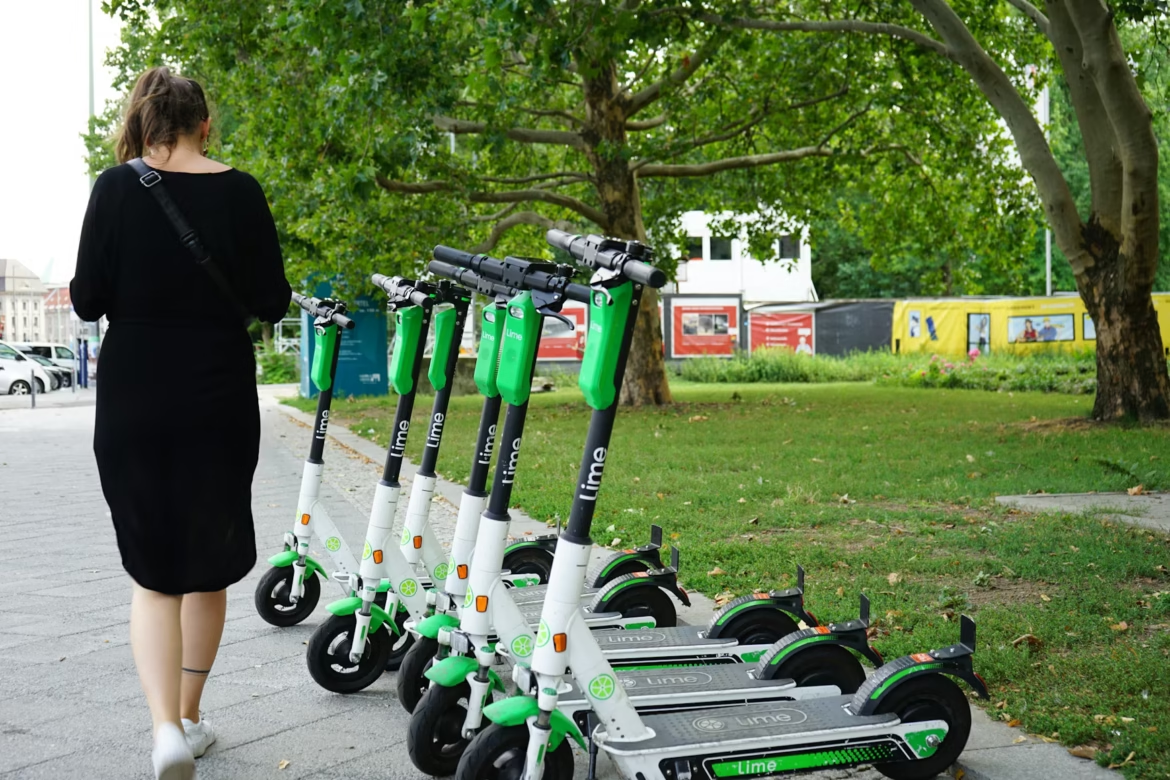
E-scooter company Lime has announced a new AI-powered system called Lime Vision that will roll out in Seattle this summer. An AI model analyzes in real time footage from a front-mounted camera to determine whether a rider is on the road, in a bike lane, or on the sidewalk. When the system detects unsafe behavior, such as riding on sidewalks that can put pedestrians at risk, it triggers an audible alert, prompting the rider to move to a safer location.
2. Repairing Navy Ships Quicker
U.S.-based robotics company Gecko Robotics has built a fleet of climbing, flying, and swimming inspection robots that help the U.S. Navy repair aging ships faster. The machines scan hulls, tanks, and internal structures to create detailed 3D digital models of a ship’s condition. Their sensors collect thickness, corrosion, and structural data as they move, and the built-in software analyzes those readings to pinpoint damage and reduce manual inspections.
U.S.-based health-tech company Mave Health has created a lightweight headset, similar in shape and size to an eye-mask, designed to improve attention, mood, and stress regulation. The device delivers low-intensity electrical currents to specific brain regions during short daily sessions. Its sensors track how the brain responds to each stimulation cycle, and the companion app analyzes patterns over time to show users how their focus and emotional states change.
4. Turning Delivery Driver into AI Trainers
DoorDash has launched a new feature that pays delivery drivers to complete small digital jobs that help train the company’s AI systems, such as improving mapping, delivery routing, and object recognition. Workers record short videos or capture real-world data while out on deliveries. The app feeds these submissions into AI systems that learn from large numbers of real‑world examples, strengthening the models for future deployment.
5. Cooling Data Centers More Effectively
Seattle-based tech company Phaidra has partnered with Nvidia, CoreWeave, and Applied Digital to deploy an AI system that helps prevent dangerous heat spikes in data centers. The platform uses networks of sensors to monitor power usage and other early-warning signals before temperatures rise. Its AI system analyzes these patterns in real-time and recommends adjustments to cooling systems, helping operators avoid overheating while reducing wasted energy and water.
Researchers at Oklahoma State University have built a system that enables robots to respond when a human operator detects a mistake—even before the person physically reacts. An operator wears a non‑invasive EEG cap, a headset that measures the brain’s electrical activity, which picks up error-related signals the moment the user realizes something is going wrong. The system sends these signals to the robot as an early warning, allowing it to pause, slow down, or adjust its movement, improving safety during human‑robot tasks.
7. Reducing Airplane Pollution
American Airlines and Google have tested an AI system that helps pilots avoid creating contrails, thin white cloud-strikes that contribute to global warming. The AI studies real-time weather data, humidity, and satellite information to predict where contrails are likely to form. It then suggests small altitude changes—often just a few hundred feet—that pilots can choose to follow, helping reduce contrails without major fuel burn or delays.
8. Catching Alzheimer’s Disease
Researchers at Worcester Polytechnic Institute in Massachusetts have built an AI system that can spot early signs of Alzheimer’s disease by studying brain scans. The team trained the system on hundreds of scans from older adults, teaching it to identify subtle patterns by comparing them across many past examples. The AI system flags early changes linked to memory decline, giving doctors an earlier warning and more time to begin treatment, monitoring, and care planning.
9. Protecting Firefighters with Robots
Hyundai has built a large, tank-like firefighting robot that can be remotely operated and drive into burning buildings and other dangerous areas without putting firefighters at risk. The robot keeps itself cool by constantly spraying water over its body. It uses thermal cameras and computer vision to see through smoke, while an AI system assists by mapping safe paths, supporting firefighters’ decisions and improving situational awareness from a safer distance.
Seattle-based tech startup Lamu has created an app that uses an AI chatbot to help people find relationship matches. The chatbot learns about each user by asking questions about their personality, values, and communication style, then analyzes how they write and respond during conversations in the app. Using that information, it suggests a small number of curated matches each week and offers conversation starters, helping people meet each other.


