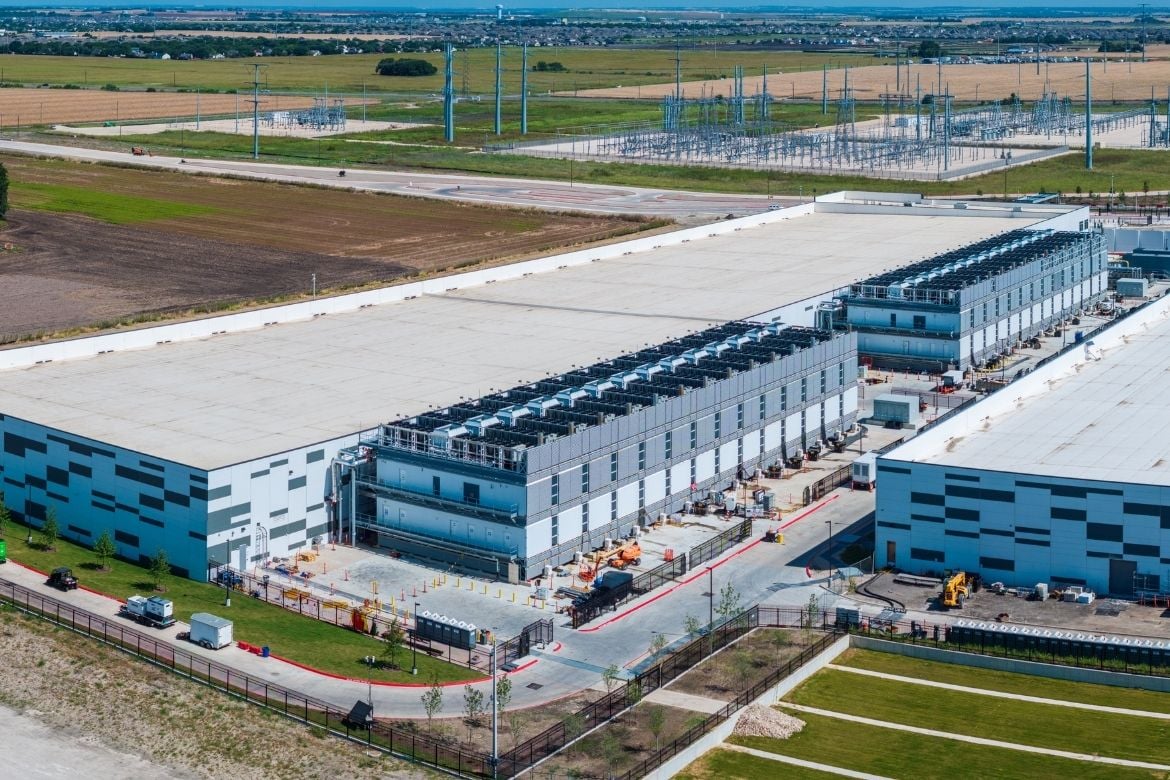
Data centers have become a target for critics who portray them as a drain on local resources rather than an investment to improve their communities. Many of the concerns driving that criticism, such as fears about AI driving up energy prices or straining local watersheds, are overstated or readily addressed through better infrastructure planning and utility regulation. Meanwhile, the benefits to communities that host data centers are increasingly difficult to dismiss. Data centers generate significant tax revenue, create construction and skilled-trade jobs, support new power and grid infrastructure, and can reduce costs for other electricity customers when regulators require them to pay their fair share. Communities considering data-center development should focus on capturing these benefits and managing the costs rather than turning away investment that can materially improve local economies.
The clearest benefit is often tax revenue. Communities sometimes offer tax incentives to attract data centers, just as they do to compete for other major investments, but those incentives do not eliminate the substantial revenue that development can generate. In Richland Parish, Louisiana, the surge in local sales-tax revenue associated with Meta’s $27 billion data center campus helped the school board increase full-time teacher bonuses to $50,935 in June 2026, from $10,200 the year before. In Loudoun County, Virginia, data centers provide about 38 percent of the county’s general fund while occupying roughly 4 percent of its commercial land. That revenue has helped the county reduce its real property tax rate every year since 2016. Prince William County, Virginia collected $280 million in data-center tax revenue in 2024, a 68 percent increase from the previous year.
The jobs created during construction are another substantial benefit. For example, Meta reports more than 46,000 skilled-trade construction jobs—such as steel workers, pipefitters, electricians, and carpenters—across its U.S. sites since 2011. Data center opponents often dismiss these jobs because they are temporary or because some workers come from outside the immediate community. Construction jobs are temporary by nature, but workers still earn wages and local contractors and suppliers gain business while projects are underway. And while some workers may commute from elsewhere, particularly in areas with limited skilled-trade labor, they still spend money in the communities where they work.
Data-center development can also expand the local workforce, and many developers are investing in workforce training. Microsoft operates Datacenter Academy programs with community colleges in several states, while Meta is partnering with the real-estate firm CBRE to launch a free fiber-technician training program. Google has funded workforce development programs to help over 300,000 Americans prepare for jobs in the skilled trades, and Amazon Web Services offers no-cost professional training and certificates for workers to learn fiber-optic installation.
Data centers are also prompting investments that can reduce pressure on local water supplies. Microsoft fully funded a $31 million water-reuse plant in Quincy, Washington, that recycles cooling water and offsets an estimated 138 million gallons of demand each year. Amazon is expanding the use of treated wastewater instead of drinking water for cooling, with a goal of saving more than 530 million gallons of drinking water annually. Google has invested over $500 million in water infrastructure in communities where it operates data centers, including projects such as a new aquifer storage system in The Dalles, Oregon.
Data centers can also help finance the electricity infrastructure maintenance and upgrades that communities need, resulting in lower electricity bills and fewer power outages. For example, Entergy estimates that data-center agreements in Arkansas, Louisiana, and Mississippi will save its 2.3 million customers about $5 billion over two decades. And Indiana Michigan Power announced earlier this year that it will cut base rates, the largest part of most of its 600,000 customers’ bills, due to added revenue from large customers including data centers.
Aside from cheaper energy bills, demand from data centers is also leading to more investments in clean energy, as well as jobs in that sector. For instance, Meta has partnered with Invenergy, a clean energy provider, to bring online nearly 1,800 megawatts of new solar and wind power in Ohio, Arkansas, and Texas. And in Pennsylvania, Microsoft’s 20-year power agreement supporting the planned restart of Three Mile Island Unit 1 is expected to bring roughly 3,400 jobs and $3 billion in taxes.
These benefits matter when evaluating proposals for new data centers. States that impose broad moratoriums or other barriers to data-center development are effectively turning away tax revenue, jobs, private investment, and potential infrastructure improvements before determining whether they can manage any potential concerns. Communities should remember they can require developers to pay for the infrastructure they need, protect other ratepayers, address water constraints, and negotiate community investments without rejecting development altogether.
Data centers, like any major development, will change the communities where they are built. The relevant question is whether those changes leave communities better off. With sound policies, communities can capture substantial economic benefits while requiring developers to address the infrastructure and resource demands their projects create. States that shut the door on these opportunities risk giving up the tax revenue, jobs, investment, and infrastructure improvements that other communities are already using to strengthen their local economies.