
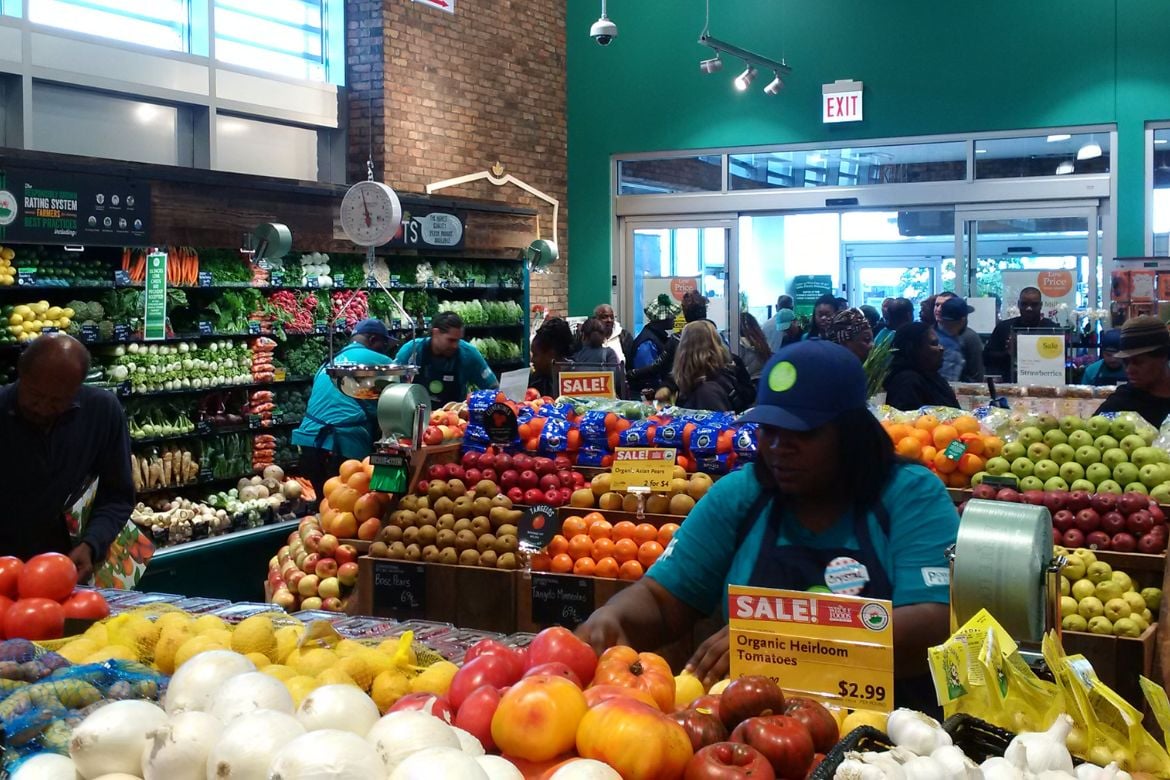
A container of strawberries nearing expiration is discounted, allowing a customer to save money while the store reduces food waste. A supply shock—such as avian flu—drives up egg costs, and retailers adjust prices accordingly. These are routine examples of how prices respond to supply and demand. Yet lawmakers in states such as New Jersey, Oklahoma, and Tennessee are considering restrictions on the technologies that enable these adjustments. In doing so, they risk targeting the mechanism of pricing rather than the specific practices that may harm consumers.
Part of the problem is conceptual confusion. Policymakers often conflate several distinct pricing practices. Dynamic pricing refers to prices changing over time in response to factors such as supply, demand, or inventory. Algorithmic pricing refers to the use of software to help set prices, whether those prices are fixed or dynamic. A narrower category, personalized pricing, involves setting prices or offering discounts based on information about individual consumers. These practices are analytically distinct, and treating them as interchangeable leads to poorly targeted policy.
Concerns about consumer harm are more appropriately directed at deceptive pricing practices, such as hidden fees or situations where shelf prices do not match what consumers are charged at checkout. These are longstanding consumer protection issues, and both state and federal law already provide tools to address them. By contrast, broad restrictions on pricing methods risk limiting benign or beneficial practices without clearly addressing deception.
Recent state proposals illustrate this mismatch. In New Jersey, lawmakers are considering bans on personalized algorithmic pricing in grocery retail and delivery. While concerns about fairness and transparency in personalized pricing warrant attention, overly broad restrictions could eliminate common forms of targeted discounts. Retailers frequently use purchase history or loyalty programs to offer promotions, a benefit to price-sensitive shoppers. Restricting these practices could reduce the availability of such discounts and shift retailers toward more uniform pricing structures.
In Oklahoma and Tennessee, lawmakers have proposed banning electronic shelf labels (ESLs), which allow grocery retailers to update prices digitally rather than replacing paper tags. These systems are primarily a tool for operational efficiency: they reduce the labor involved in changing prices and can help ensure that displayed prices match those charged at checkout. Banning ESLs would not directly address deceptive pricing practices and could make accurate, timely price updates more difficult.
The economic characteristics of food retail further complicate the case for broad intervention. Grocery retail is generally understood to be a highly competitive sector, with consumers able to choose among many options, including national chains, regional grocers, and discount retailers. Profit margins are typically thin. In such an environment, retailers face constraints on their ability to raise prices without losing customers. While these factors do not eliminate the possibility of harmful practices, they do shape the likely effects of new regulation.
Where concerns about pricing practices do arise, existing enforcement mechanisms are often the more appropriate tool. States—including New Jersey, Oklahoma, and Tennessee—already prohibit misleading or deceptive pricing, and federal regulators have shown interest in pricing transparency in related contexts such as delivery services. Public scrutiny can also influence firm behavior, particularly when pricing practices are perceived as unfair or opaque.
None of this suggests that all uses of data or algorithms in pricing are beyond scrutiny. Questions about transparency, consumer expectations, and fairness—especially in the context of personalized pricing—are legitimate. But broad prohibitions on dynamic or algorithmic pricing tools risk addressing these concerns imprecisely. A more targeted approach would focus on clearly defined deceptive practices and ensure that existing laws are effectively enforced.
There are many factors that contribute to food prices, including supply disruptions, input costs, and logistics. Pricing technologies are better understood as tools that reflect these underlying conditions rather than primary drivers of higher prices. Policymakers should be cautious about restricting such tools in ways that may reduce efficiency or limit discounting, and instead focus on addressing demonstrable harms where they occur.
Image credit: Artistmac/Flickr


