
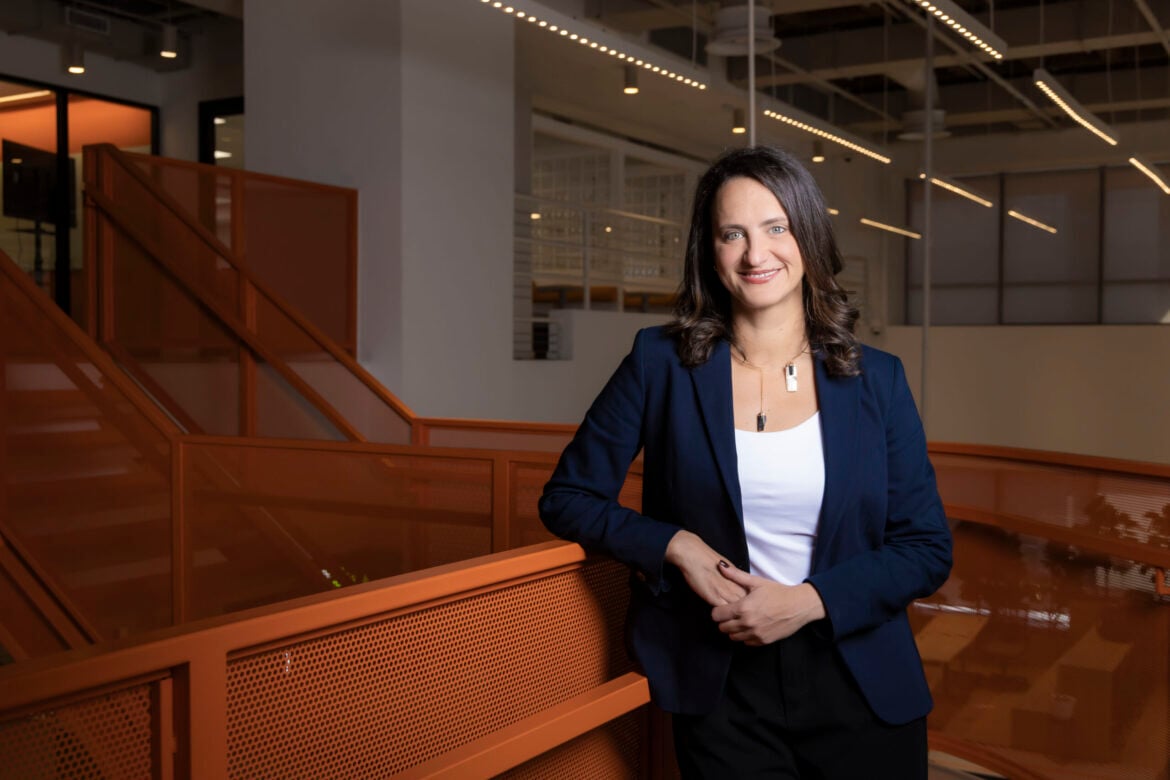
The Center for Data Innovation recently spoke with Maria Paola de Salvo, CEO of EasyTelling, a Brazil-based company developing an AI-powered platform that translates scientific research into practical applications. De Salvo explained how EasyTelling uses its proprietary Knowledge Translation methodology to help organizations find relevant research, assess its strength, and identify ways to apply scientific findings to real-world challenges.
David Kertai: What problem is EasyTelling solving?
Maria Paola de Salvo: Organizations across industries rely on scientific research to guide major technical decisions, yet much of that knowledge never reaches the people who could use it. Research often remains buried in academic papers, patents, and theses instead of informing products, technologies, and business decisions. Companies spend hundreds of millions of dollars on research and development and open innovation, sometimes repeating experiments or pursuing approaches that existing research could have ruled out. The result is a persistent gap between scientific discovery and practical application.
EasyTelling addresses this gap with an AI-powered platform that helps organizations find, evaluate, and apply scientific research. Users describe a technical challenge in natural language, and the platform searches more than 233 million scientific articles and patents to identify relevant evidence. Our proprietary Knowledge Translation methodology then organizes that evidence around three questions: how the research can be applied, how mature those applications are, and who could put them into practice. The platform also links its conclusions back to the original sources, giving users a traceable path from research to recommendation.
Kertai: What role does your Knowledge Translation method play in this process?
De Salvo: Knowledge Translation is a structured methodology for turning scientific research into information that people can apply. It asks not only what a study discovered, but also how the findings could be used, who could use them, and what steps would be required to put them into practice. The approach has roots in fields such as public health and medicine, where researchers needed to move evidence into clinical practice and public policy.
EasyTelling applies this methodology across its platform. For each relevant study, the system identifies practical applications, assesses their maturity using Technology Readiness Levels—a standardized scale for measuring how close a technology is to practical deployment—and identifies organizations or researchers that could help apply them. This allows us to move beyond simply finding relevant papers and explain how the evidence could be applied.
Kertai: How does your AI system identify the most relevant research for a specific problem?
De Salvo: The process begins when a user describes a challenge in natural language. EasyTelling translates that question into multiple optimized searches that examine the problem from different angles across our database of scientific literature. Users therefore do not need to know specialized terminology or construct the perfect search query themselves.
The system then applies multiple AI-powered filters to identify studies that are scientifically robust and relevant to the question. Rather than relying on a journal’s reputation alone, the platform evaluates the evidence itself and prioritizes stronger forms of evidence, such as systematic reviews and meta-analyses. Our AI system then applies the Knowledge Translation methodology to the selected research, identifying how the findings address the user’s problem and what practical applications they could support.
Kertai: How do you ensure the insights generated from scientific research remain accurate and grounded in the original evidence?
De Salvo: Traceability is central to our platform. We link every claim to its original scientific source so users can see which evidence supports a conclusion. The system also distinguishes between what the research demonstrates, what it suggests, and what remains uncertain, allowing users to examine the underlying evidence rather than simply accept an AI-generated answer.
We also prevent the AI system from answering research questions based solely on its general knowledge. The system must search and retrieve relevant scientific evidence before generating an answer. When the available evidence does not support a conclusion, it says so rather than providing an unsupported response.
EasyTelling also evaluates the strength of the evidence and adjusts its output accordingly. The platform uses our Technology Readiness Levels scale to assess and score how close a research application is to practical deployment. These safeguards help ensure that recommendations reflect both the quality of the evidence and the maturity of the proposed application.
Kertai: Could you share any use cases that demonstrate how organizations are using EasyTelling’s platform?
De Salvo: In one case, a company used EasyTelling to evaluate a formulation after nearly two years of research. The platform identified evidence suggesting that the approach was unlikely to produce the desired result, allowing the team to reconsider its direction before investing additional resources. In another case, EasyTelling connected a technical challenge that had remained unresolved for years with research from a completely different scientific field and helped the company connect with the researcher behind it.
These cases illustrate EasyTelling’s broader purpose: helping organizations find scientific knowledge they might otherwise overlook and turn it into actionable decisions. This approach has led us to support research and development teams at companies, such as Suzano, Ajinomoto, and Vale. By connecting companies with researchers and evidence across disciplines, we aim to make scientific research more discoverable, practical, and useful.


