
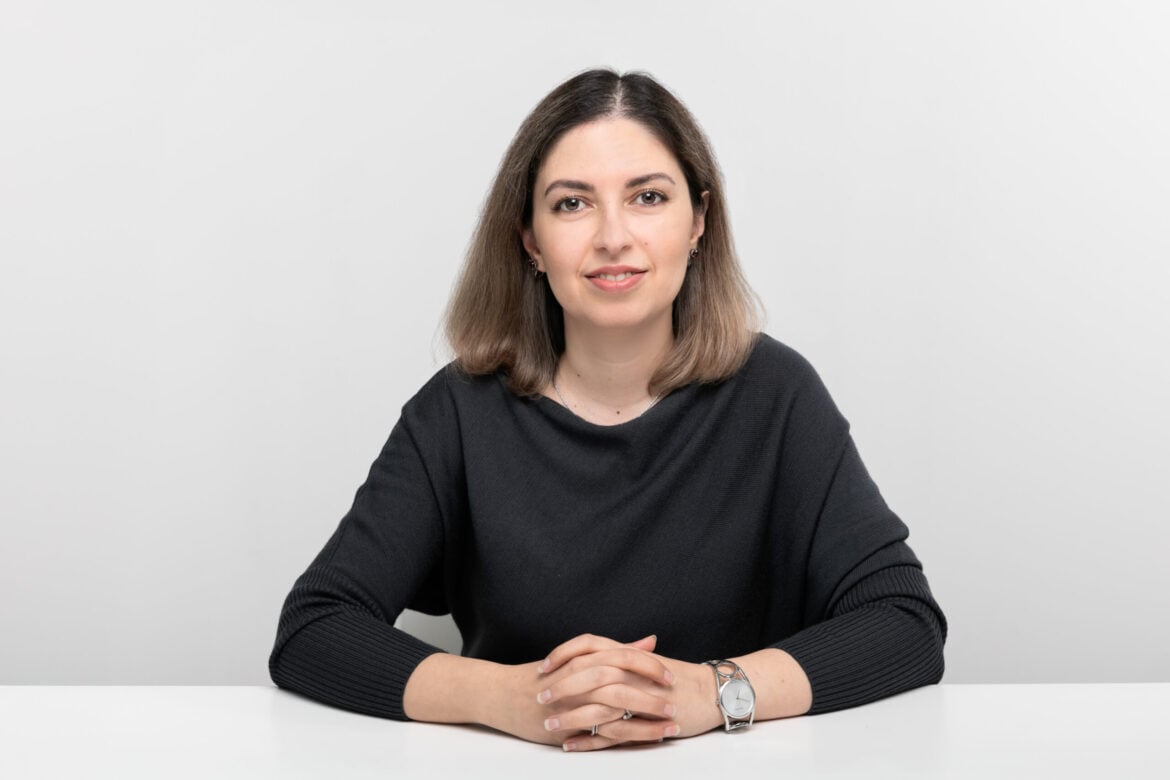
The Center for Data Innovation recently spoke with Ana Beik, CEO of Golden Owl, a Spain-based company providing an AI-powered intelligence platform that analyzes geopolitical events and supply-chain risks. Beik explained how the platform combines public records and online data with AI-driven analysis to detect hidden patterns and deliver actionable insights to users.
David Kertai: What inspired the creation of Golden Owl?
Ana Beik: Organizations increasingly struggle to make sense of fast-moving geopolitical shifts, fragmented information streams, and external risks that don’t fit neatly into traditional financial or operational models. Companies and governments often face contradictory reporting, hidden supply-chain vulnerabilities, or reputational threats that emerge long before conventional risk systems detect them.
For example, a political dispute in one country may quietly disrupt a supplier network months before shortages appear, or coordinated online narratives may begin damaging a company’s reputation before formal reporting catches up. As these pressures become more common, many organizations found themselves unable to identify reliable warning signs early enough to act.
Golden Owl was created to help organizations make sense of this complexity. We built an AI-powered platform that analyzes geopolitical events, supply-chain risks, public reporting, and online information to uncover hidden risks and strategic opportunities. Instead of forcing analysts to manually piece together scattered information, the platform organizes and interprets large volumes of data in a way that helps users quickly understand what matters most and where attention is needed.
Kertai: How does your platform analyze data from different sources to uncover risks and opportunities?
Beik: We gather data primarily from open‑source intelligence, such as media outlets, public records, and social‑media environments, so we can observe how information evolves across different contexts. Our AI platform uses multiple specialized models that work together to analyze information from different perspectives. The platform compares claims across sources, checks whether information is credible and relevant, identifies possible bias or inconsistencies, and evaluates how reliable each source appears before presenting insights to users.
This process allows us to move beyond surface‑level summaries. By comparing narratives, detecting contradictions, and mapping how information behaves across ecosystems, we uncover risks and opportunities that would otherwise remain buried in fragmented reporting.
Kertai: How do you identify patterns without large data volumes?
Beik: We designed the platform to identify emerging risks and changes early by examining the behavior of information itself. It looks for anomalies, inconsistencies, sudden narrative shifts, and gaps that indicate something important is being obscured or beginning to emerge. It examines how stories evolve across regions, how actors respond to events, and where information diverges from expected patterns.
By focusing on relationships and context rather than sheer quantity, the system can detect early indicators of risk or opportunity even when data is sparse, incomplete, or intentionally manipulated. This approach mirrors how seasoned analysts spot weak signals long before they become widely visible.
Kertai: How are your platform’s insights delivered to users?
Beik: We deliver insights through two main systems. Our platform, Noctua, provides users with dashboards, investigative workflows, downloadable reports, and application programming interfaces that connect directly with enterprise or government systems. This allows analysts, investigators, compliance teams, and security professionals to explore intelligence findings in a structured and searchable format.
For organizations that require continuous monitoring, our second system within our platform, Strix, tracks incoming information in real-time and alerts users to operational changes, emerging risks, or significant environmental shifts as they happen. Together, these systems help organizations move from overwhelming volumes of information to clear, decision-ready intelligence.
Kertai: Could you share any examples of your platform in use?
Beik: Organizations use our platform for investigative analysis, supply-chain risk monitoring, strategic due diligence, and competitive intelligence. Some users apply it to identify hidden business relationships, monitor sanctions exposure, detect coordinated misinformation campaigns, or investigate unfair competition activity across global markets.
Across these use cases, the value is consistent: the platform helps organizations identify hidden risks and emerging opportunities earlier and with greater precision. By filtering out noise and organizing fragmented information into a clearer picture, we help users make faster and more confident decisions in complex environments.


