
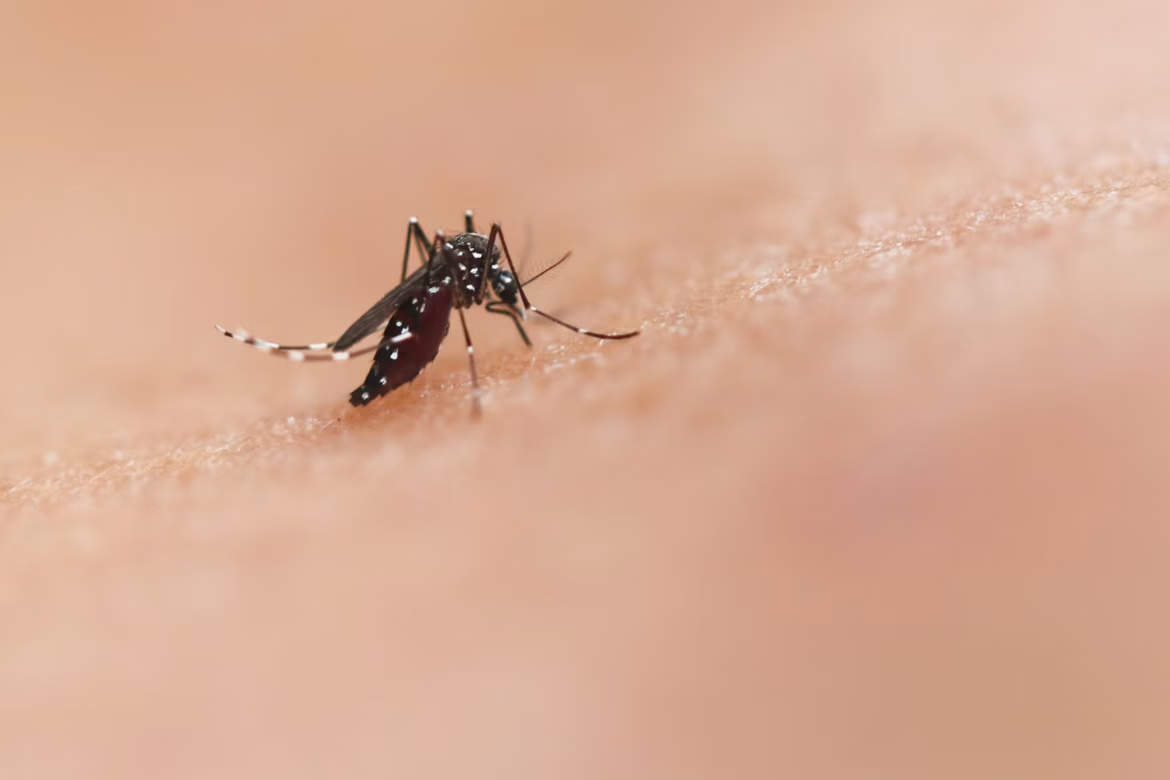
This week’s roundup of data news from October 10 to October 16, 2026, features an AI-powered mosquito-monitoring network designed to track disease risks and a new platform using an AI system to advance efforts to restore genetic traits of extinct species.
1. Restoring Bird Songs
Researchers at the University of Buenos Aires in Argentina have explored how AI tools can help restore bird songs that have disappeared from local populations. Using recordings from the 1960s, the team recreated a song once heard in a Buenos Aires park and played it to local rufous-collared sparrows. One bird began imitating parts of the synthetic song, highlighting the potential for conservationists to preserve traditional bird calls.
2. Detecting Hidden Fires
Rangers at Cairngorms National Park in the UK have used drones equipped with thermal cameras to locate wildfire hot spots hidden beneath the ground. The cameras detect heat from smoldering vegetation and roots that can keep burning after visible flames disappear. Rangers can then direct ground crews to these areas to extinguish remaining fires. The technology could help prevent wildfires from reigniting and improve monitoring of burned landscapes.
3. Expanding Research Computing
Georgia Tech has built a supercomputer called Nexus that gives researchers access to computing power for demanding scientific projects. The system combines high-performance computing with cloud services, allowing researchers to process large datasets, train AI models, and run complex simulations. Nexus could accelerate research in areas such as medicine, robotics, and advanced manufacturing.
4. Testing Mobility Technologies
The Detroit Smart Parking Lab, a mobility-technology testing facility in Michigan, provides a real-world environment where companies can evaluate new transportation technologies before deployment. Developers can test innovations such as AI-powered vehicle inspections and autonomous electric-vehicle charging systems. The facility aims to accelerate mobility innovation by helping companies identify challenges and prepare products for commercial use.
5. Accessing Workforce Data
The U.S. Office of Personnel Management has launched an AI chatbot that lets users explore federal workforce data using plain-English questions. The tool translates questions into database queries and returns answers drawn from official government statistics, along with explanations of how it generated the results. Users can also download data for further analysis. The chatbot could make federal employment trends easier for researchers, journalists, and the public to investigate.
6. Monitoring Mosquitos
New York-based technology company Mosqitter has introduced an AI-powered mosquito-monitoring system that tracks mosquito species and populations over time. The platform combines traps, computer vision, and environmental data to identify mosquitoes and monitor their numbers. By detecting changes in local populations, the system could help public health agencies identify potential disease risks and deploy mosquito-control efforts more effectively.
7. Predicting Cancer Recurrence
Chicago-based technology company SimBioSys has developed an AI tool that estimates the risk of breast cancer returning after treatment. Its TumorSight Risk software analyzes breast MRI scans, pathology results, and other clinical information to estimate a patient’s five- and ten-year recurrence risk. These estimates could help doctors and patients make more informed treatment decisions, including whether additional treatment or closer monitoring may be appropriate.
8. Improving Airport Maintenance
Pittsburgh International Airport has partnered with robotics company Skild AI to introduce four-legged robots that monitor airport facilities. Equipped with cameras and sensors, the robots can detect issues such as spills, overflowing trash bins, and air-quality concerns, then alert staff. The airport plans to expand their tasks as it evaluates their performance. The initiative could help maintenance teams identify problems sooner and keep terminals cleaner and safer.
9. Documenting Patient Interactions
The North East Ambulance Service in the UK is testing an AI tool that helps paramedics document patient interactions. The tool records conversations, converts speech into text, and drafts summaries for medical records. Clinicians review and edit the notes before adding them to patient files. The eight-week trial will assess whether the technology can reduce paperwork and give ambulance staff more time to focus on patient care.
10. Identifying Genetic Targets
U.S. biotechnology company Colossal Biosciences has developed an AI platform called GenoMorph to help researchers identify genetic changes linked to traits of extinct species. The platform combines genetic information with anatomical data to predict which regions of DNA influence physical features, such as the dodo’s distinctive beak and skull. The tool could advance de-extinction research by helping scientists identify and prioritize gene-editing targets.


