
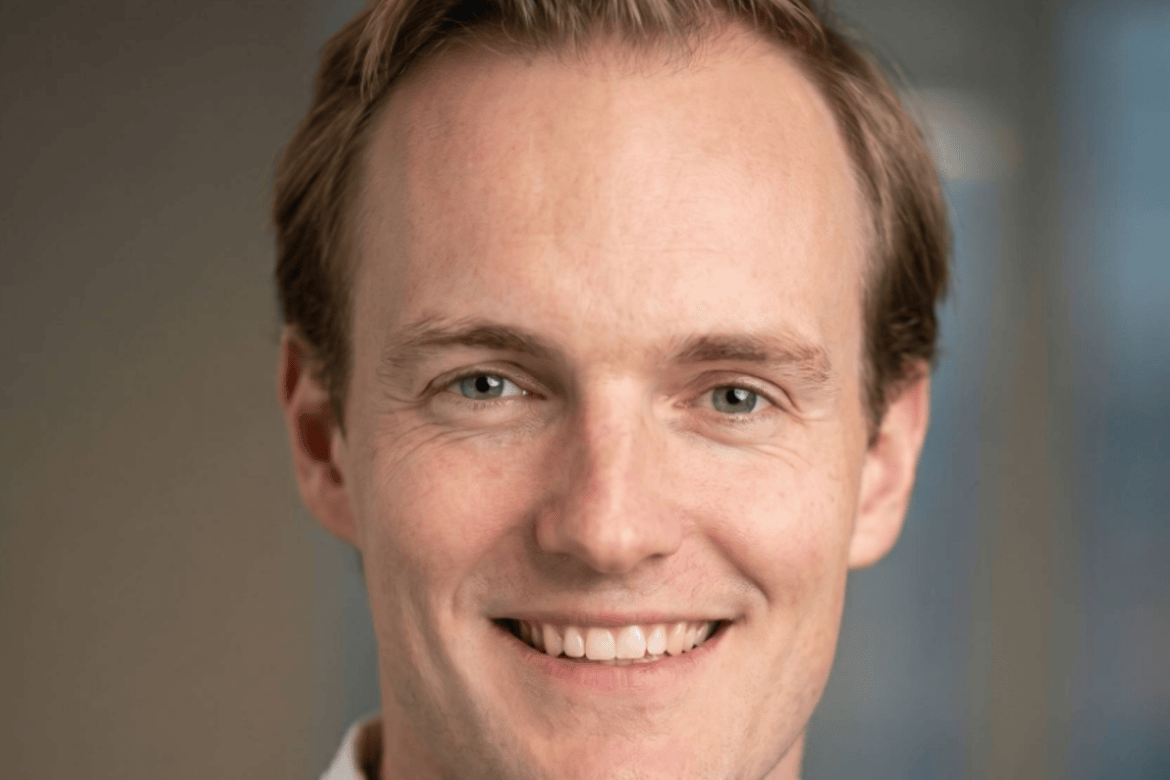
The Center for Data Innovation recently spoke with Christian Vahlensieck, co-founder of Alp Bio, a Switzerland-based startup developing an AI-powered platform that helps pharmaceutical companies predict immune reactions to biopharmaceutical drugs. Vahlensieck explained how Alp Bio combines machine learning with laboratory-grown human immune tissue to identify potential safety risks early in drug development.
David Kertai: What problem is Alp Bio solving?
Christian Vahlensieck: Biologic drugs, such as therapeutic antibodies and other protein-based medicines, have transformed the treatment of many diseases. However, because these drugs are made from biological materials, the human immune system can sometimes recognize them as foreign and launch an immune response. When that happens, the body may neutralize the drug, reduce its effectiveness, or cause harmful side effects. Predicting these reactions, known as immunogenicity, is extremely difficult, so pharmaceutical companies often discover problems only during clinical trials, after investing years of development and significant resources.
Alp Bio helps make these risks visible much earlier. We combine AI models with laboratory-grown immune tissue called organoids, which are small clusters of cells that mimic some of the functions of real human tissues. Our organoids are created from donated tonsil tissue that would otherwise be discarded after routine medical procedures. Because tonsils contain large numbers of immune cells and play an important role in the body’s immune defenses, they provide a valuable model for studying immune responses. By exposing these organoids to potential drug candidates, we can observe how human immune cells react and help pharmaceutical companies identify immunogenicity risks before drugs reach clinical testing.
Kertai: What types of data does your platform use?
Vahlensieck: To study how the immune system responds to new biologic drugs, medicines made from living cells rather than traditional chemical compounds, we expose the organoids to DNA sequences that contain the biological instructions for producing the drug being tested. The organoid cells then manufacture the drug themselves, allowing us to observe how the immune system responds as if it were encountering it for the first time.
If the immune system recognizes the drug as foreign, we see measurable changes in different immune-cell populations. We track these changes using a laboratory technique called flow cytometry, which counts and classifies different types of cells. This provides numerical measurements showing how immune-cell populations change over time.
We combine these measurements with publicly available information from previously tested drugs, including clinical outcomes such as whether patients developed immune reactions. By comparing our laboratory results with known real-world outcomes, we build datasets that help predict how new biologic-drug candidates may behave.
Kertai: How do your AI models analyze immunology data?
Vahlensieck: Our AI models combine three main sources of information: clinical outcomes from previously tested drugs, publicly available information about drug sequences, and data generated from our tonsil-organoid experiments. Together, these datasets allow the model to learn patterns associated with immune responses.
The models analyze how specific changes in immune-cell populations relate to known clinical outcomes. Over time, it learns which biological patterns are associated with higher or lower immunogenicity risk and applies those insights to new drug candidates. This allows us to estimate the likelihood that a biologic will trigger an unwanted immune response before it reaches clinical trials.
Kertai: What makes your approach different from traditional immunogenicity assessments?
Vahlensieck: Most existing approaches focus primarily on one part of the immune system: T cells, a type of white blood cell that helps coordinate immune responses. While T cells are important, another group of immune cells called B cells produces antibodies that often play a major role in immunogenicity. Because B cells respond to complex three-dimensional structures, traditional prediction methods often struggle to capture their behavior accurately.
Our approach provides a more complete view because the tonsil organoids contain many of the immune-cell types involved in a real immune response, including both T cells and B cells. Instead of relying solely on computational predictions, we can directly observe how immune cells behave in a controlled biological system. This produces more consistent and standardized data than many clinical datasets, which often vary because researchers use different methods across studies.
Kertai: What is your long-term vision for Alp Bio?
Vahlensieck: We want to help accelerate the shift toward AI-driven drug design. Today, researchers can use AI systems to generate new biologic-drug candidates on a computer, but they still lack reliable ways to predict whether those candidates will trigger immune reactions. By providing accurate and scalable immunogenicity prediction, we can help researchers identify the most promising candidates earlier and move them into testing with greater confidence. Ultimately, our goal is to reduce drug-development risk, speed the delivery of new therapies, and help unlock the full potential of AI-designed medicines.


