
6
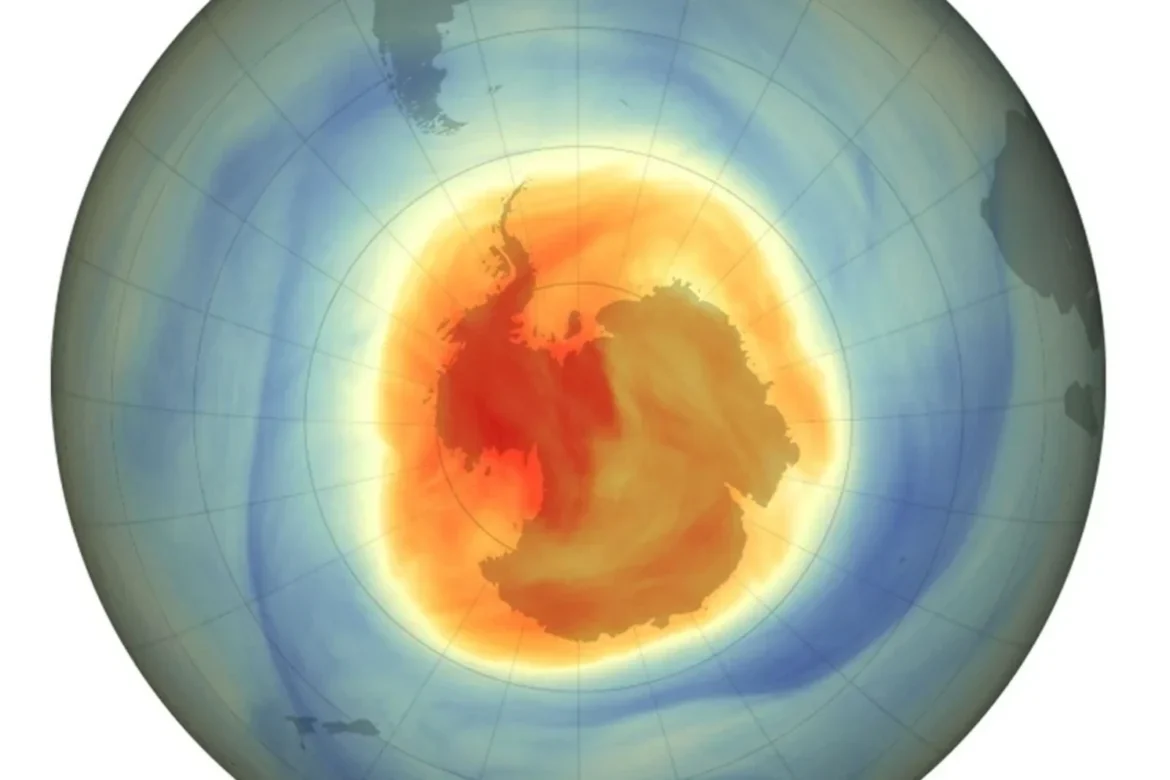
Scientists at NASA and NOAA report that this year’s Antarctic ozone hole reached its largest size in a decade, driven in part by an unusually strong polar vortex, a circulation of cold air around Antarctica. At its peak, the ozone hole covered about 10.5 million square miles, as colder atmospheric conditions contributed to greater ozone loss. The map shows ozone concentrations, with darker shades of red indicating areas of more severe depletion.


